

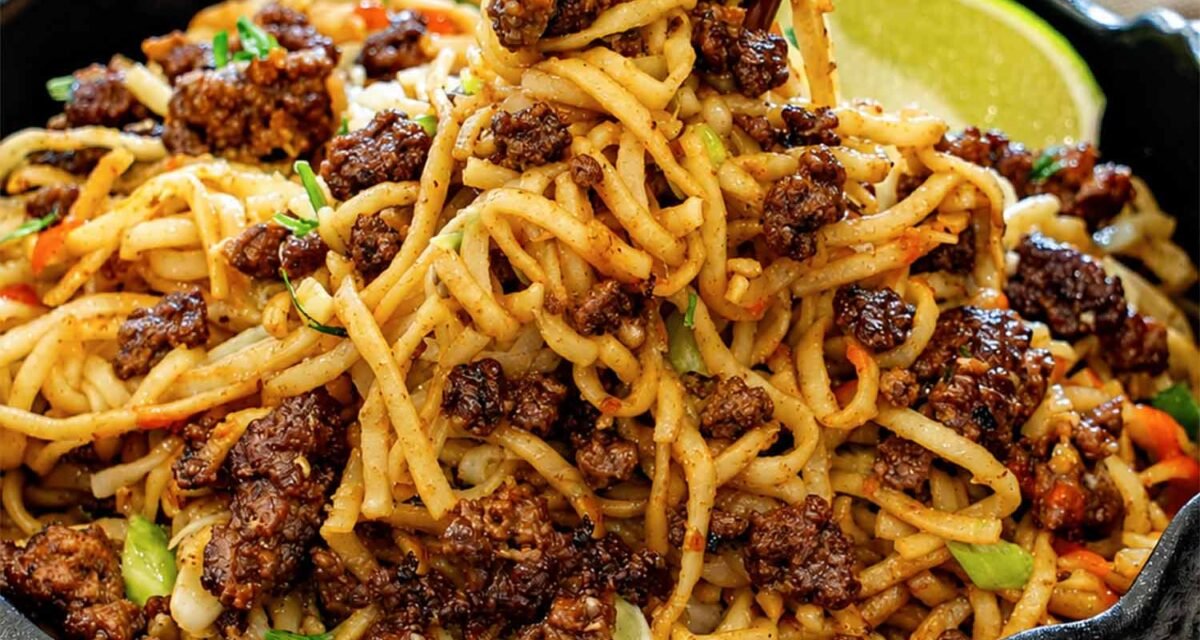

These Caramelized Beef and Peanut Noodles have ground beef cooked until dark and sticky at the edges, tossed with lo mein noodles in a glossy peanut sauce made with soy, sesame, and a little fish sauce that you won’t taste but you’ll absolutely feel the absence of if you skip it. Ready in 30 minutes and the kind of noodle dish that makes you forget takeout exists.
Noodles are my love language. I’ve been making Asian noodle dishes for years and they’re some of the most requested recipes on all three of my blogs, and honestly some of the most satisfying things I cook at home. There’s something about a good noodle dish that just hits differently from everything else.
This one is special because of the beef. Most ground beef recipes have you browning it and moving on. This one asks you to do something slightly different. After the beef is cooked through you leave it alone in the pan for a minute or two and let the bottom caramelize into a dark sticky crust. That crust is where all the flavor lives and it’s what takes these noodles from good to the kind of thing you scrape the pan for.
The peanut sauce is rich, savory, slightly sweet, and has just enough sriracha to let you know it’s there. Everything comes together in 30 minutes and tastes like it took considerably longer.
About Fish Sauce
It smells alarming. I know. Every time I open a bottle of fish sauce in the vicinity of someone who hasn’t cooked with it before I get the same look. Use it anyway.
In the finished dish fish sauce doesn’t taste fishy at all. What it does is add a deep savory umami backbone that you genuinely can’t replicate with anything else. It’s one of those ingredients that you don’t notice when it’s there but you’d absolutely notice if it was missing. If you’re truly opposed, a little extra soy sauce is the best substitute but I’d encourage you to give it a try first. It might surprise you.
Ingredients in Caramelized Beef and Peanut Noodles
- Ground beef (1 pound): The protein base and the star of the caramelizing technique. 85 to 90 percent lean is ideal, enough fat for flavor without making the dish greasy.
- Lo mein noodles (10 ounces): The right noodle for this dish. Sturdy, chewy, and they hold up to the sauce beautifully. Find them in the Asian aisle of most grocery stores. If you can’t find lo mein, egg noodles or even spaghetti work in a pinch.
- Vegetable oil: For cooking the beef. High smoke point, neutral flavor.
- Garlic (4 cloves, minced) and fresh ginger (1 tablespoon, grated): The aromatic base that goes in after the beef caramelizes. Fresh ginger only, ground ginger isn’t the same here.
- Soy sauce (low sodium): The salty backbone of the sauce. Low sodium so you control the salt level.
- Brown sugar: Balances the saltiness and contributes to the glossy sticky sauce finish.
- Creamy peanut butter: Adds richness and that distinctive peanut flavor. Creamy not chunky so the sauce stays smooth.
- Rice vinegar: A little acidity that brightens the whole sauce and keeps it from being one dimensional.
- Sriracha: Adjustable heat. Start with 1 tablespoon and add more if you like it spicier.
- Toasted sesame oil: Adds that toasty nutty finish that makes Asian noodle dishes taste like Asian noodle dishes. Goes into the sauce not the pan, it’s there for flavor not for cooking.
- Fish sauce: See the section above. Use it. I promise you won’t regret it. Extra soy sauce is the substitute if you’re truly opposed.
- Green onions, roasted peanuts, fresh cilantro, and lime wedges: For finishing. The peanuts add crunch, the lime brightens everything, and the cilantro adds freshness. Don’t skip the lime squeeze at the end.
How to Make Caramelized Beef and Peanut Noodles
Cook the noodles according to the package directions, drain, and toss with a small splash of oil so they don’t clump while you work on the beef. Set them aside within arm’s reach.
Whisk the soy sauce, brown sugar, peanut butter, rice vinegar, sriracha, sesame oil, and fish sauce together in a small bowl until smooth. Set it next to the stove because once the beef is ready things move quickly.
Heat the vegetable oil in a large skillet or wok over medium high heat. Add the ground beef and cook, breaking it up, until browned all the way through. Then here’s the important part. Stop stirring. Leave the beef alone for 1 to 2 minutes and let the bottom sit undisturbed against the hot pan. You’re waiting for it to develop a dark caramelized crust, you’ll hear it sizzling and see the edges getting deep brown and sticky. That’s exactly what you want. That crust is where most of the flavor in this dish comes from and it’s what makes these noodles taste like something special rather than just ground beef with noodles.
Add the garlic and ginger and cook for 1 minute until fragrant. Pour in the sauce and let it bubble and reduce for 2 to 3 minutes, stirring, until it turns glossy and sticky and coats the beef.
Add the noodles and toss until every strand is coated in that gorgeous sauce. Stir in most of the green onions and peanuts, saving some for the top.
Serve immediately topped with the remaining green onions, peanuts, fresh cilantro, and a squeeze of lime over everything. The lime is not optional. It brightens the whole dish and you’ll taste the difference.
Tips and Tricks
- Don’t rush the caramelization. The 1 to 2 minutes of leaving the beef undisturbed is the most important step in the recipe. Be patient and let it do its thing.
- Toss the cooked noodles with oil. It takes 10 seconds and prevents them from clumping into a sad noodle brick while you cook the beef.
- Whisk the sauce before it goes in. Peanut butter can settle and separate slightly. Give it a quick stir right before pouring.
- Taste and adjust. Before the noodles go in, taste the sauce on the beef. More sriracha if you want more heat, a little more brown sugar if you want more sweetness. This is your dish.
- Squeeze the lime at the end. Every time. The acidity cuts through the richness of the peanut butter and soy and makes everything taste brighter and more balanced.
- Serve immediately. Noodles absorb the sauce as they sit and the dish gets thicker and drier over time. Eat it hot and fresh.
Try These Recipes Next
- Sheet Pan Honey Garlic Meatballs
- Szechuan Beef
- Korean Beef Tacos
- Asian Ground Beef Noodles
- Chinese Sizzling Beef
- Mongolian Beef Noodles
Caramelized Beef and Peanut Noodles
#wprm-recipe-user-rating-7 .wprm-rating-star.wprm-rating-star-full svg * { fill: #343434; }#wprm-recipe-user-rating-7 .wprm-rating-star.wprm-rating-star-33 svg * { fill: url(#wprm-recipe-user-rating-7-33); }#wprm-recipe-user-rating-7 .wprm-rating-star.wprm-rating-star-50 svg * { fill: url(#wprm-recipe-user-rating-7-50); }#wprm-recipe-user-rating-7 .wprm-rating-star.wprm-rating-star-66 svg * { fill: url(#wprm-recipe-user-rating-7-66); }linearGradient#wprm-recipe-user-rating-7-33 stop { stop-color: #343434; }linearGradient#wprm-recipe-user-rating-7-50 stop { stop-color: #343434; }linearGradient#wprm-recipe-user-rating-7-66 stop { stop-color: #343434; }
Ingredients
For the sauce
- ⅓ cup soy sauce low sodium
- 3 tablespoons brown sugar
- 3 tablespoons creamy peanut butter
- 2 tablespoons rice vinegar
- 1 tablespoon sriracha
- 1 tablespoon toasted sesame oil
- 1 tablespoon fish sauce
For the noodles
- 10 ounces lo mein noodles
- 1 pound ground beef
- 1 tablespoon vegetable oil
- 4 cloves garlic minced
- 1 tablespoon fresh ginger grated
- 3 green onions sliced
- ⅓ cup roasted peanuts chopped
- ¼ cup fresh cilantro chopped
- 1 lime cut into wedges
Instructions
-
Cook the 10 ounces noodles according to the package directions. Drain, then toss with a splash of oil so they do not clump while you cook the beef.
-
In a small bowl, whisk together the ⅓ cup soy sauce, 3 tablespoons brown sugar, 3 tablespoons peanut butter, 2 tablespoons rice vinegar, 1 tablespoon sriracha, 1 tablespoon sesame oil, and 1 tablespoon fish sauce until smooth.
-
Heat the 1 tablespoon vegetable oil in a large skillet or wok over medium high heat. Add the 1 pound ground beef and cook, breaking it up, until browned. Then leave it alone for a minute or two so the bottom crisps and caramelizes. That dark, sticky crust is the whole point, so do not rush it.
-
Add the 4 cloves minced garlic and 1 tablespoon grated ginger and cook for 1 minute, until fragrant.
-
Pour in the sauce and let it bubble and reduce for 2 to 3 minutes, stirring, until it turns glossy and sticky and coats the beef.
-
Add the cooked noodles and toss until every strand is coated in the sauce.
-
Stir in most of the sliced green onions and chopped peanuts, saving some for the top.
-
Serve topped with the remaining green onions, peanuts, ¼ cup cilantro, and lime wedges.
Notes
- The caramelization step: After the beef is browned, stop stirring and leave it undisturbed for 1 to 2 minutes. Let the bottom develop a dark sticky crust before moving on. This is where most of the flavor comes from and it’s worth the extra 2 minutes.
- Toss the noodles with oil: Right after draining, toss with a small splash of oil. Takes 10 seconds and prevents them from clumping into a noodle brick while you cook the beef.
- Fish sauce: It smells alarming in the bottle but doesn’t make the dish taste fishy. It adds deep savory umami that makes everything taste more complex. Extra soy sauce is the best substitute if needed.
- Peanut butter: Creamy not chunky so the sauce stays smooth and coats the noodles evenly.
- Sesame oil: Goes into the sauce not the pan. It’s there for flavor not for cooking and has a low smoke point.
- Sriracha: Start with 1 tablespoon and adjust to taste. This is very much a to taste ingredient.
- Squeeze the lime: Every time. The acidity cuts through the richness of the peanut butter and makes everything taste brighter and more balanced.
- Serve immediately: Noodles absorb the sauce as they sit and the dish gets thicker and drier over time. Eat it hot and fresh.
- Leftovers: Add a splash of water or broth when reheating to loosen everything back up. Reheats well in a skillet over medium heat.
- Lo mein substitutes: Egg noodles are the best substitute. Spaghetti works in a pinch. Udon noodles are excellent if you want something chewier.
- Ground pork: My favorite swap for the beef. Slightly sweeter flavor that works beautifully with the peanut sauce.
Nutrition
Frequently Asked Questions
Can I use a different protein?
Absolutely. Ground pork is actually my favorite swap here, it has a slightly sweeter flavor that works beautifully with the peanut sauce. Ground chicken or turkey work too though I’d add a little extra oil since they’re leaner and can dry out faster.
Can I skip the fish sauce?
I’d really encourage you not to. It doesn’t taste fishy in the finished dish at all, it just adds a depth of flavor that makes everything taste more complex and satisfying. If you’re truly opposed, extra soy sauce is the best substitute but the depth won’t quite be the same.
What can I use instead of lo mein noodles?
Egg noodles are my first choice substitute. Spaghetti works in a pinch and nobody will know. Udon noodles are also excellent here if you want something a little chewier.
Can I make this less spicy?
Yes, just reduce the sriracha or leave it out entirely. I’d add it back at the table for those who want the heat so everyone can adjust their own bowl.
Can I make this ahead of time?
The sauce can be made up to 3 days ahead and stored in the fridge. The full dish is best made fresh since the noodles absorb the sauce as they sit. If you have leftovers add a splash of water or broth when reheating to loosen everything back up.
My sauce didn’t get glossy. What happened?
It probably needed a little more time to reduce. Let it bubble for the full 2 to 3 minutes before adding the noodles and make sure your heat is high enough. Medium high is the sweet spot here.
The post Caramelized Beef and Peanut Noodles appeared first on Craving Home Cooked.



[…] Caramelized Beef and Peanut Noodles […]
[…] Caramelized Beef and Peanut Noodles […]
[…] Caramelized Beef and Peanut Noodles […]