

Why Scholarship and Student Loan Reform Matters Now
Tertiary education funding has become an increasingly urgent policy issue across Nigeria’s north-central states, where rising tuition costs, inconsistent bursary disbursements, and economic hardship have combined to push dropout rates upward. In Benue State, a predominantly agrarian economy with a large youth population, the gap between the cost of higher education and household income has widened in recent years mostly due to displacement of people in rural communities occasioned by herder attacks, according to education stakeholders who have long called for structural intervention rather than one-off palliatives.
Against this backdrop, Aondoakaa framed his Scholarship and Student Loan proposal as a response to a funding crisis he described as central to the state’s development challenges. He argued that underprivileged students who might otherwise excel academically are being forced out of classrooms and lecture halls due to financial constraints, and that state government intervention is necessary to reverse the trend.
The candidate positioned the initiative not as a standalone education policy but as part of a broader youth empowerment and human capital development strategy, linking access to tertiary education directly to the state’s long-term economic prospects.
Terms of the Proposed Student Loan Program
According to details he explained at the conference, the student loan component of the plan would extend beyond tuition coverage to include living stipends, addressing a gap that many existing state and federal loan schemes have historically overlooked. Nigerian tertiary students often cite accommodation, feeding, and study materials as costs that rival or exceed tuition itself, making stipend support a significant addition if implemented as described.
The most distinctive element of the proposal is its repayment structure. Rather than requiring graduates to begin repayment immediately or within a fixed short window after graduation, the plan would introduce a 20-year flexible repayment period that only commences once a beneficiary secures verifiable employment and demonstrates financial stability. This income-contingent approach mirrors repayment models used in some international student loan systems, where repayment obligations are tied to a graduate’s demonstrated earning capacity rather than a rigid calendar.
Proponents of such deferred, employment-linked repayment structures argue that they reduce the risk of loan default and ease the transition from education to the workforce, particularly in regions where graduate unemployment remains high.
Critics of similar schemes elsewhere, however, have noted that verifying “financial stability” can be administratively complex, raising questions about how such a system would be implemented and monitored in practice. Aondoakaa’s campaign has not yet released detailed implementation guidelines, including how employment verification would be conducted or which state agency would administer the fund.
Scholarship Revival and Its Intended Impact
The second pillar of the announcement, reviving Benue State’s scholarship scheme, targets underprivileged students specifically, rather than tertiary students broadly. State scholarship programs in Benue, as in many Nigerian states, have historically suffered from inconsistent funding, delayed disbursement, and periods of complete dormancy tied to changes in political administration.
Aondoakaa’s pledge to fully revive the scheme suggests an effort to restore continuity to a support system that has fluctuated significantly over past administrations. Education advocates in the state have previously pointed to the on-again, off-again nature of scholarship funding as a key driver of dropout rates, since students who lose access to bursary support mid-program often cannot complete their studies without alternative financing.
By pairing scholarship revival with the new loan scheme, the proposal appears designed to create a layered support system: grants for the most financially vulnerable students, and loans for those who can eventually repay once employed. Whether this dual approach would be sufficient to meaningfully reduce dropout rates depends heavily on funding levels, disbursement consistency, and administrative capacity, details that remain to be clarified as the campaign progresses.
Event Context and Notable Attendees
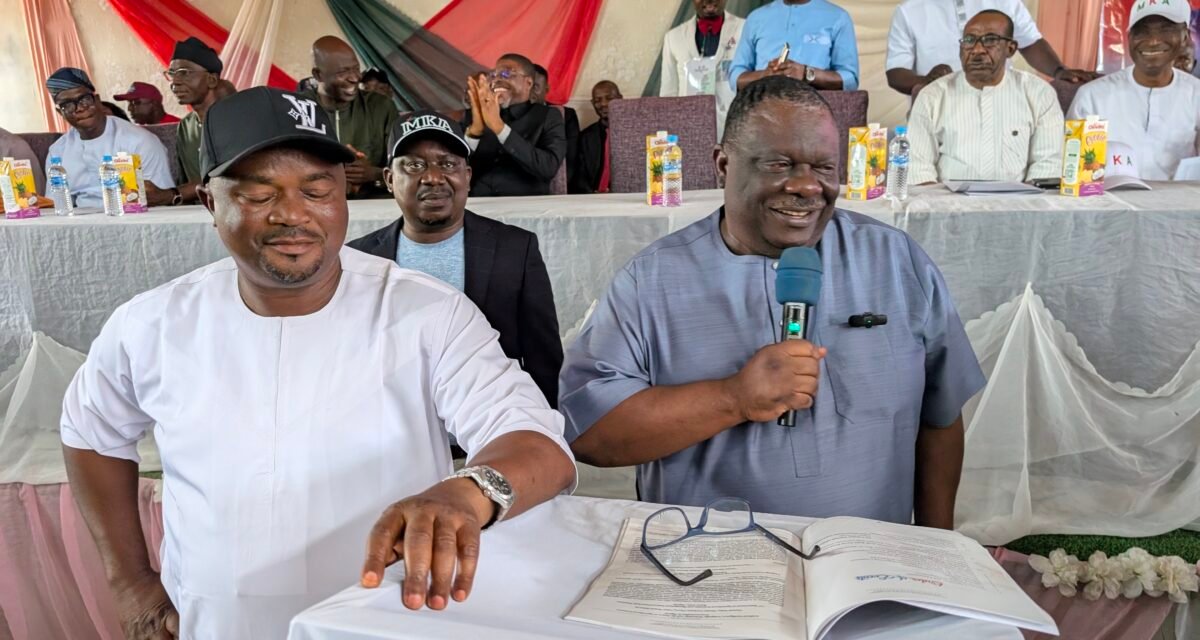
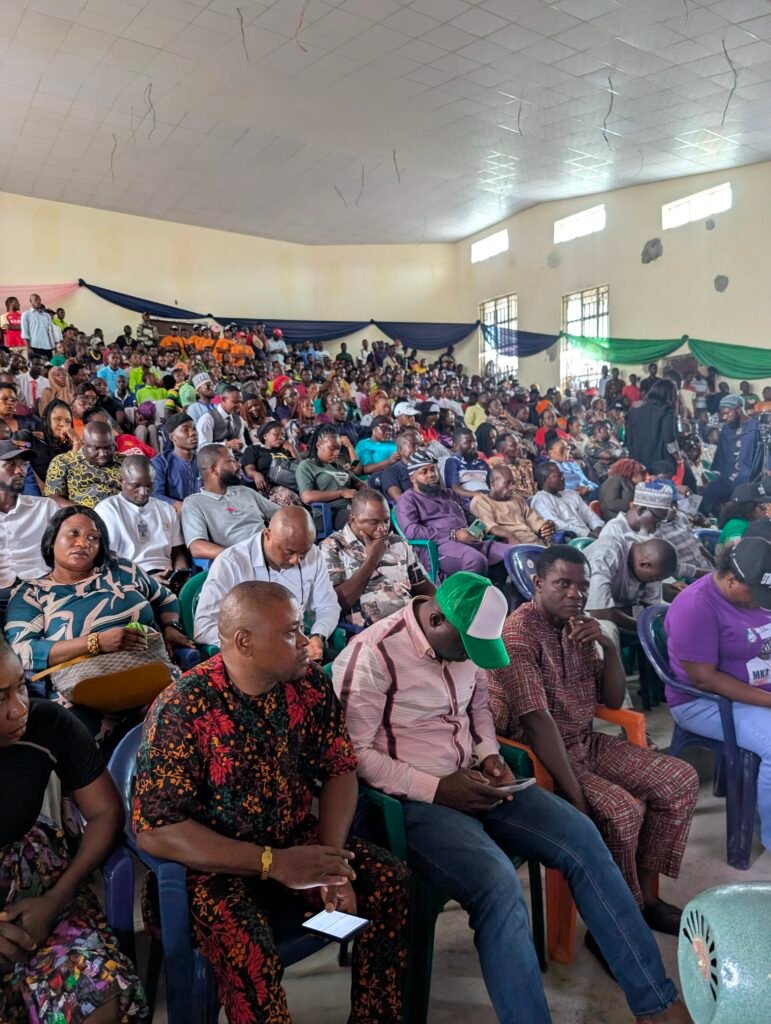
The announcement was made at a gathering of language educators drawn from colleges of education and polytechnics across Nigeria, convened under the banner of the National Association of Teachers of Languages in Colleges of Education and Polytechnics. The choice of venue, an academic conference rather than a campaign rally, placed the pledge within an educational rather than overtly political framing, though its timing amid Benue’s gubernatorial race was unmistakable.
Among those in attendance were Dr. Tyover Ashinya Dajo, Rector of the Federal Polytechnic, Wannune, who hosted the conference, and Barr. Cosmas Akighir, Board Chairman of the North Central Development Commission. Their presence lent institutional and regional development weight to the event, situating Aondoakaa’s remarks within a wider conversation about education policy and human capital investment across Nigeria’s north-central zone.
Reactions and Outstanding Questions
As with many campaign-season pledges, the proposal has been received with a mix of interest and caution among education stakeholders, who note that similar promises of scholarship revival have featured in past Benue political cycles without full or sustained implementation. The credibility of the current pledge, observers suggest, will likely hinge on whether a costed implementation framework, covering funding sources, eligibility criteria, and administrative oversight, is published ahead of the general election.
For now, the Scholarship and Student Loan initiative stands as a policy commitment rather. Its ultimate impact on Benue State’s tertiary education funding landscape, and on the broader goal of reducing student dropout rates, will depend on the specifics that emerge as the campaign, and potentially a future administration, moves from pledge to policy.