

What Is Pi Network?
Pi Network is a blockchain-based digital currency project launched in 2019 by a team of Stanford University graduates. The project aims to make cryptocurrency mining accessible to everyday users through mobile phones, eliminating the need for energy-intensive hardware commonly associated with traditional cryptocurrencies like Bitcoin.
The network allows users, known as Pioneers, to earn Pi coins by validating network activity through a mobile application. Pi Network is structured in phases, with the current phase focusing on ecosystem development and gradual transition toward a fully open blockchain environment.
Definition of Pi (PI)
Pi (PI) is the native digital currency of the Pi Network ecosystem. It is designed to function as a medium of exchange within applications, services, and marketplaces built on the Pi blockchain. Unlike traditional cryptocurrencies that were immediately tradable upon launch, Pi has followed a phased approach, limiting external trading until certain network conditions are met.
Understanding Pi Network’s Current Market Status
Pi Network is currently operating under what is known as an enclosed mainnet. This means that while Pi transactions can occur within approved Pi ecosystem applications, unrestricted trading on major cryptocurrency exchanges has not yet been officially enabled by the Pi Core Team.
As a result, Pi is not officially listed for open trading on major global exchanges such as Binance, Coinbase, or Kraken. Any price visible on exchanges at this stage does not reflect an officially sanctioned Pi Network market rate.
What Is IOU Trading?
IOU trading, short for “I Owe You” trading, refers to a speculative market arrangement where exchanges list a token that represents a promise to deliver the actual asset once it becomes officially tradable.
In the context of Pi Network:
- The IOU token is not the real Pi coin
- It represents a contractual placeholder
- It carries speculative value only
- It depends on future mainnet openness and exchange integration
Platforms such as Bitget, MEXC, and CoinGecko clearly label Pi prices as IOU-based, emphasizing that these figures are not official or guaranteed.
Pi Network Price in Nigerian Naira (NGN)
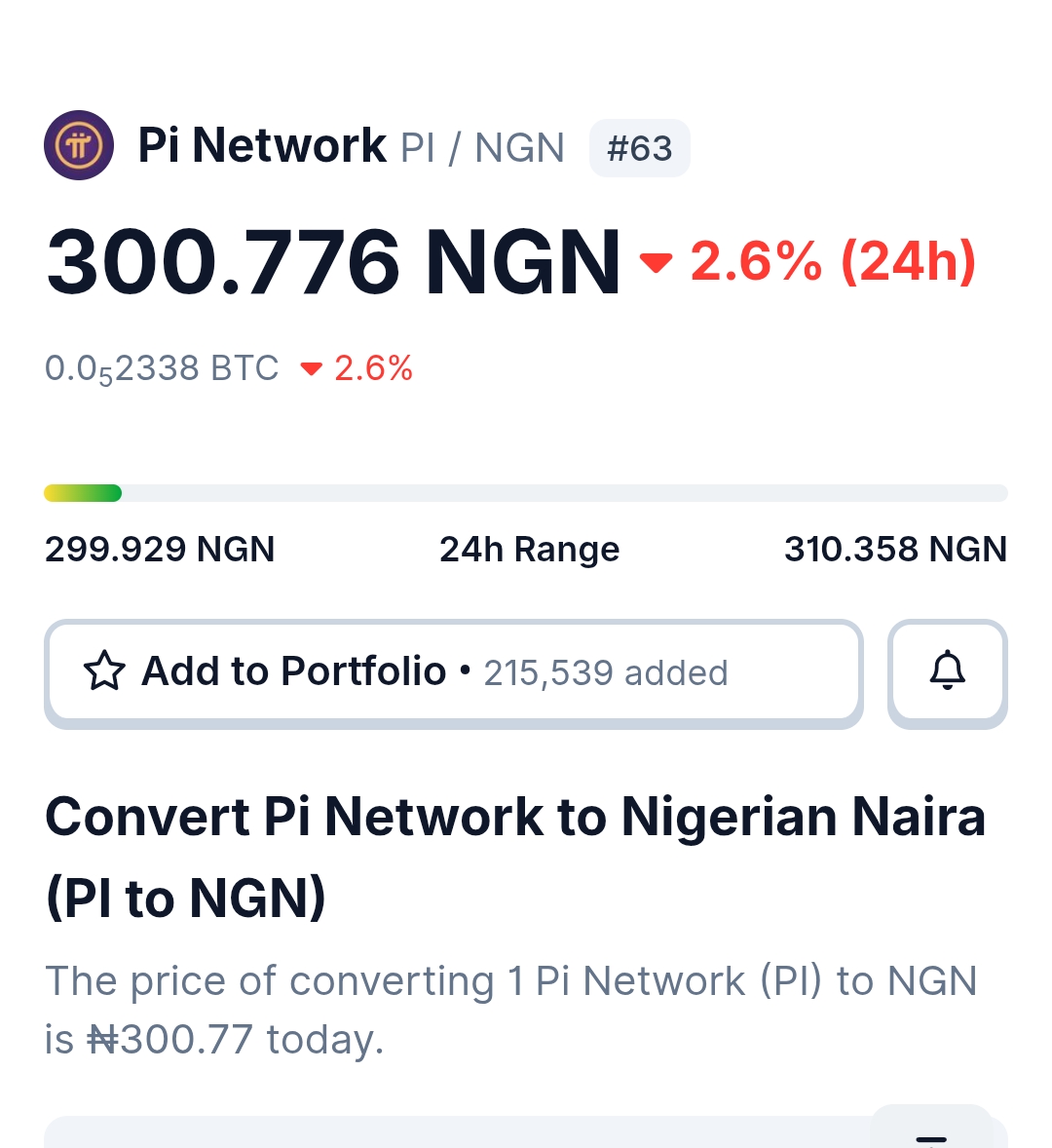
Based on publicly available data from cryptocurrency tracking platforms, the displayed IOU price of Pi Network in Nigerian Naira typically falls within the following range:
- ₦293.98 – ₦306.49 NGN on Bitget
- Approximately ₦310.60 NGN on MEXC
- Around ₦308.82 NGN on CoinGecko
These slight variations are normal in speculative markets and result from differences in liquidity, trading volume, and exchange-specific demand.
It is important to emphasize that these figures:
- Do not represent an official Pi Network valuation
- Are subject to rapid fluctuations
- Reflect market sentiment rather than intrinsic value
Why Pi Network Prices Differ Across Platforms
1. Exchange Liquidity
Liquidity refers to how easily an asset can be bought or sold without significantly affecting its price. Lower liquidity often leads to higher price volatility.
2. Market Demand
Speculative demand varies across platforms depending on user interest, geographic concentration, and trading activity.
3. Currency Conversion Rates
Displayed NGN prices depend on real-time foreign exchange conversion rates between the Nigerian Naira and base trading pairs such as USDT (Tether).
What Is Peer-to-Peer (P2P) Trading?
Peer-to-peer (P2P) trading involves direct transactions between individuals without a centralized exchange acting as an intermediary. In Nigeria, some Pi holders claim to trade Pi coins directly for naira or goods using informal arrangements.
Reported P2P rates for Pi in Nigeria range widely from ₦500 to ₦5,000 per PI, depending on negotiation, perceived future value, and buyer trust.
Risks Associated With P2P Pi Transactions
1. Lack of Verification
There is no official mechanism to verify ownership, authenticity, or delivery of Pi coins in informal trades.
2. Scam Risk
Fraudulent schemes often exploit high price expectations and limited user knowledge.
3. No Platform Protection
Unlike regulated exchanges, P2P deals do not provide dispute resolution, escrow services, or transaction guarantees.
For these reasons, platforms such as Bitget caution users against treating informal P2P rates as standard market prices.
What Is Bitget?
Bitget is a global cryptocurrency exchange that provides spot trading, derivatives, and market data services. It is recognized for transparent asset labeling and clearly distinguishes IOU listings from officially tradable tokens.
What Is MEXC?
MEXC is a digital asset exchange that supports a wide range of cryptocurrencies and speculative listings. Like Bitget, MEXC lists Pi as an IOU token and provides price data for tracking purposes only.
What Is CoinGecko?
CoinGecko is a cryptocurrency data aggregation platform that tracks prices, market capitalization, trading volume, and token listings across exchanges. CoinGecko does not facilitate trading itself but compiles information from multiple sources for transparency and research.
Why Pi Network Has Not Launched Open Trading Yet
The Pi Core Team has consistently emphasized that open trading will only begin after key network conditions are met, including:
- Completion of identity verification (KYC)
- Migration of user balances to mainnet wallets
- Deployment of functional ecosystem applications
- Ensuring network security and scalability
This cautious approach is intended to reduce fraud, prevent premature speculation, and build real utility before market exposure.
Understanding Market Speculation
Market speculation refers to trading based on expectations of future value rather than current utility. IOU trading and P2P price claims largely fall into this category.
Regulatory Considerations in Nigeria
Nigeria’s regulatory authorities, including the Central Bank of Nigeria (CBN) and the Securities and Exchange Commission (SEC), have advised caution in cryptocurrency participation. While digital assets are not illegal, users are encouraged to understand risks and avoid unverified investment schemes.
How to Check the Latest Pi Network Price Safely
To stay informed without unnecessary risk, users can:
- Monitor Pi IOU prices on platforms like Bitget, MEXC, and CoinGecko
- Follow official Pi Network announcements for updates on mainnet progress
- Avoid relying on social media price claims without verification
Conclusion
The Pi Network price in Nigerian Naira remains a topic of strong interest, but it is essential to separate speculation from verified information. Current figures displayed on exchanges represent IOU trading and do not reflect an officially launched Pi market. While informal peer-to-peer rates in Nigeria may appear higher, they carry notable risks and should not be regarded as reliable indicators of value.
As Pi Network continues its gradual development toward open mainnet functionality, clarity around pricing, trading, and real-world utility is expected to improve. Until then, Nigerian users are best served by staying informed through trusted platforms, understanding the limitations of current price data, and exercising caution in all transactions.