
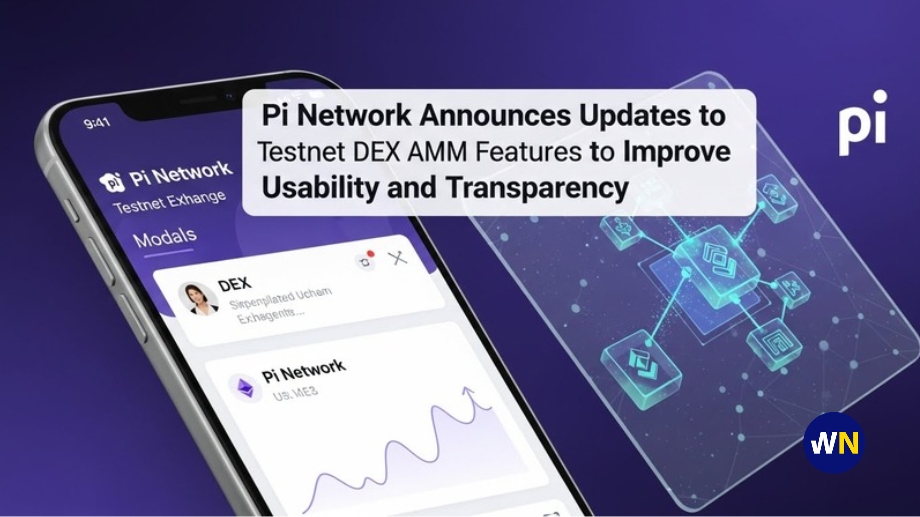
The Pi Network ecosystem has taken another significant step in its ongoing development with the announcement of major updates to its Testnet decentralized exchange (DEX) and automated market maker (AMM) liquidity pool features. According to the Pi Network team, these updates are designed to improve usability, enhance transparency, and better organize liquidity within the Testnet environment. The changes include a redesigned interface, Pi-denominated trading pairs, domain verification as a trust signal, and a new liquidity-based token ranking system.
- Understanding Pi Network and Its Testnet Environment
- What Is a Decentralized Exchange (DEX)?
- Defining Automated Market Makers (AMMs)
- Why Usability Matters in Decentralized Finance
- The Importance of Transparency in Blockchain Systems
- Pi-Denominated Trading Pairs Explained
- Domain Verification as a Trust Signal
- Understanding Liquidity-Based Token Ranking
- The Role of Pioneer Feedback in Development
- Why Testnet Features Are Subject to Change
- How These Updates Fit Into the Broader DeFi Landscape
- Managing Expectations Around Testnet Developments
- Security and Risk Considerations
- What These Changes Mean for the Pi Ecosystem
- The Educational Value of Testnet Participation
- Conclusion
These improvements, the team explained, are based on early usage patterns, testing results, and feedback from Pioneers—the term used to describe Pi Network users. The features remain subject to further modification as Testnet activity continues to be evaluated.
This article provides a detailed, educational breakdown of the announcement, explains all relevant terms for clarity, and examines what the updates may mean for Pi Network participants and the broader decentralized finance landscape.
Understanding Pi Network and Its Testnet Environment
Pi Network is a blockchain-based project that aims to make digital asset participation more accessible by allowing users to engage with its ecosystem primarily through mobile devices. Unlike many blockchain projects that require advanced hardware or technical expertise, Pi Network positions itself as user-friendly and community-driven.
A Testnet is a blockchain testing environment that allows developers and users to experiment with features without using real economic value. Transactions conducted on a Testnet do not involve live, transferable assets and are intended strictly for testing, feedback, and development purposes. This distinction is important, as Testnet upgrades are not final products but iterative steps toward a more stable and secure main network.
The Pi Testnet DEX operates within this testing framework, enabling the Pi Core Team and users to simulate decentralized trading, liquidity provision, and user interactions before such features are introduced into a production environment.
What Is a Decentralized Exchange (DEX)?
A decentralized exchange (DEX) is a digital trading platform that allows users to exchange cryptocurrencies directly with one another without relying on a centralized intermediary such as a traditional exchange company. Instead of an order book managed by a central authority, a DEX typically uses smart contracts self-executing code deployed on a blockchain to facilitate trades.
Key characteristics of a DEX include:
- Non-custodial trading, meaning users retain control of their assets.
- Transparent transaction rules encoded in smart contracts.
- Reduced reliance on centralized entities.
The Pi Testnet DEX allows users to test these principles within the Pi ecosystem while the network continues to evolve.
Defining Automated Market Makers (AMMs)
An automated market maker (AMM) is a type of DEX mechanism that uses mathematical formulas and liquidity pools instead of traditional buyers and sellers. In an AMM system, users trade against a pool of tokens rather than placing orders that must be matched by another user.
A liquidity pool is a smart contract that holds pairs of digital assets supplied by users known as liquidity providers. These pools enable continuous trading, even when there are no direct counterparties.
The Pi Testnet AMM allows participants to simulate providing liquidity and observe how trades interact with pooled assets under different conditions.
Why Usability Matters in Decentralized Finance
Usability refers to how easy and intuitive a platform is for users to navigate and understand. In decentralized finance (DeFi), usability is often cited as a barrier to broader adoption, especially for users who are new to blockchain technology.
Many early DEX platforms were criticized for complex interfaces, unclear token information, and difficult liquidity management tools. By focusing on usability improvements, the Pi Network team appears to be addressing one of the most common challenges in decentralized systems.
The redesigned interface of the Pi Testnet DEX is intended to make navigation clearer, reduce user confusion, and help participants better understand trading pairs, liquidity pools, and token rankings.
The Importance of Transparency in Blockchain Systems
Transparency in blockchain refers to the ability of users to independently verify information, transactions, and system rules. Transparent systems reduce the need for blind trust by allowing participants to inspect data directly.
In the context of decentralized exchanges, transparency can include:
- Clear identification of trading pairs.
- Visibility into liquidity pool composition.
- Information about token origins and verification status.
The Pi Testnet DEX updates aim to enhance transparency by introducing clearer trust signals and a more structured approach to token ranking.
Pi-Denominated Trading Pairs Explained
A trading pair represents two assets that can be exchanged for one another on an exchange. For example, in a traditional cryptocurrency exchange, a trading pair like BTC/USD allows users to trade Bitcoin for U.S. dollars.
Pi-denominated trading pairs are trading pairs where Pi serves as the base or reference asset. This means that instead of measuring a token’s value against another cryptocurrency or fiat currency, its value is measured relative to Pi within the Testnet environment.
This approach can help users:
- Better understand relative values within the Pi ecosystem.
- Reduce confusion caused by multiple base assets.
- Create a more unified internal economy for testing purposes.
It is important to note that Pi-denominated pairs on the Testnet do not represent real market prices or external valuations.
Domain Verification as a Trust Signal
Domain verification is a process used to confirm that a project or token is associated with a specific, verifiable web domain. In digital systems, a trust signal is any indicator that helps users assess the credibility or legitimacy of a project.
By introducing domain verification, the Pi Testnet DEX provides users with an additional layer of information to distinguish between different tokens and projects operating within the Testnet. Verified domains can help reduce confusion, impersonation risks, and misleading representations during testing.
This feature does not guarantee project quality or future success but serves as an informational tool for users navigating a growing ecosystem.
Understanding Liquidity-Based Token Ranking
A token ranking system is a method of ordering tokens based on specific criteria. In this case, the Pi Testnet DEX introduces a liquidity-based ranking system, which organizes tokens according to the amount of liquidity available in their pools.
Liquidity refers to how easily an asset can be traded without causing significant price changes. Higher liquidity generally indicates more active participation and smoother trading conditions.
A liquidity-based ranking system can help users:
- Identify tokens with more active pools.
- Understand relative participation levels.
- Navigate the DEX more efficiently.
It is essential to understand that liquidity rankings reflect Testnet activity only and are not indicators of real-world value or investment performance.
The Role of Pioneer Feedback in Development
Pioneers are members of the Pi Network community who participate in mining, testing, and ecosystem activities. Feedback from Pioneers plays a key role in shaping Testnet updates, as it provides real-world usage insights that cannot be replicated through internal testing alone.
According to the Pi Network team, the recent DEX and AMM updates are directly informed by:
- Initial usage data.
- Technical testing outcomes.
- User-submitted feedback.
This iterative development approach aligns with common practices in software engineering, where features are continuously refined based on user behavior and performance metrics.
Why Testnet Features Are Subject to Change
Testnet environments are designed to be flexible. Features introduced at this stage are explicitly subject to change, meaning they may be modified, expanded, or removed based on ongoing evaluation.
This flexibility allows developers to:
- Identify usability issues.
- Address security concerns.
- Optimize performance before mainnet deployment.
For users, this means that Testnet participation should be viewed as experimental rather than final.
How These Updates Fit Into the Broader DeFi Landscape
The broader decentralized finance (DeFi) ecosystem consists of blockchain-based financial tools such as lending platforms, exchanges, and asset management protocols that operate without centralized intermediaries.
While many DeFi platforms already exist, the Pi Network’s approach emphasizes accessibility, gradual onboarding, and community participation. The Testnet DEX updates reflect broader industry trends, including simplifying user interfaces, improving transparency mechanisms, and enhancing liquidity discovery.
Managing Expectations Around Testnet Developments
It is important for users to maintain realistic expectations when evaluating Testnet updates. Testnet features are not guarantees of future mainnet functionality, nor do they represent finalized economic models.
Educational participation, experimentation, and feedback are the primary goals at this stage. Users should avoid interpreting Testnet activity as financial advice or investment signals.
Security and Risk Considerations
Although Testnet assets do not carry real economic value, security remains an important consideration. Testing environments help developers identify vulnerabilities before they can affect live systems.
Users should still practice good digital hygiene, such as avoiding sharing sensitive information, verifying interfaces before interacting, and understanding that Testnet features may behave unpredictably.
What These Changes Mean for the Pi Ecosystem
The updated Pi Testnet DEX and AMM features suggest a continued focus on refining core infrastructure rather than rushing toward monetization. By emphasizing usability, transparency, and structured liquidity organization, the Pi Network team appears to be prioritizing long-term stability and informed participation.
The Educational Value of Testnet Participation
Beyond technical development, Testnet platforms serve an educational role. Users gain hands-on exposure to decentralized trading concepts, liquidity mechanics, and trust verification tools.
Conclusion
The Pi Network Testnet DEX and AMM updates represent an incremental but meaningful step in the project’s broader development journey. By redesigning the interface, introducing Pi-denominated trading pairs, adding domain verification, and implementing liquidity-based token rankings, the Pi Network team is addressing key usability and transparency challenges commonly associated with decentralized platforms.
As with all Testnet features, these changes remain subject to ongoing evaluation and adjustment. Their true impact will depend on continued usage, feedback, and technical refinement.
Disclaimer: This article is for informational and educational purposes only. It does not constitute financial, investment, or trading advice. Pi Network Testnet features are experimental and subject to change. Readers should conduct independent research and exercise caution when engaging with blockchain technologies.