
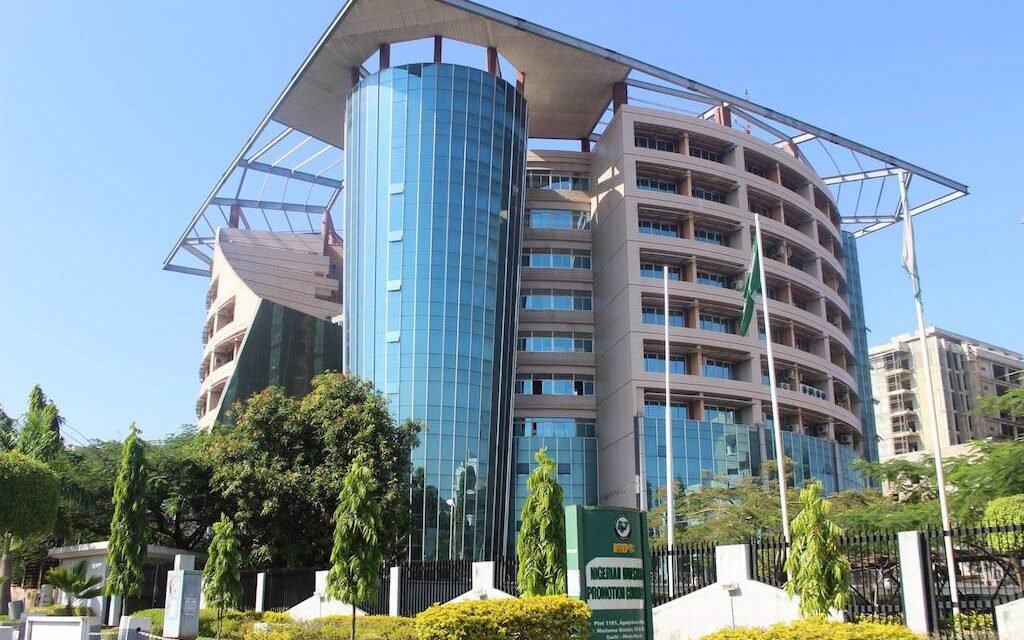
The Nigerian Communications Commission (NCC) has urged Nigerians to confirm their telephones utilizing the code *315# before paying for them, warning that unverified gadgets may very well be counterfeit or substandard.
The fee’s Director of Technical Standards and Network Integrity, Edoyemi Ogoh, mentioned the verification course of would defend shoppers from buying faux gadgets and assist forestall substandard handsets from affecting community service high quality for different customers.
“Before you buy a phone, dial *315# and confirm that the phone is fully verified before you pay,” Mr Ogoh mentioned.
He spoke on Friday throughout an interview on News Night on Arise News, explaining the NCC’s new Device Checker, which took impact on 7 October.
Why the NCC launched the verify
Mr Ogoh gave three causes for the verification course of: compliance with the regulation, client safety and improved service high quality.
He mentioned the Nigerian Communications Act 2003 requires telecommunications tools to bear sort approval to make sure it meets the nation’s requirements.


“The whole intent of that is to ensure that every device coming into the country is genuine and works the way it should work,” he mentioned.
The second motive, he mentioned, is to guard shoppers from paying for counterfeit or imitation merchandise.
“When you’re spending your hard-earned money buying a particular device, you want to be sure that the device you’re buying is actually the genuine device,” he mentioned.
“You’re not paying over the odds for a device that is fake or an imitation of the real thing.”
The third motive is service high quality. According to Mr Ogoh, the NCC’s assessments discovered {that a} vital proportion of complaints about community service had been linked to the gadgets shoppers used.
“We knew that we had to do something very important, in line with the statutory requirement, protecting the consumers, as well as ensuring that quality of service is assured for every user,” he mentioned.
He harassed that the consequences of utilizing unapproved gadgets may lengthen past their house owners to different subscribers in the identical atmosphere.
“When consumers use devices that are not type approved, it does not just impact them, it also impacts others within the same environment,” he mentioned.
“We’ve seen scenarios where a subscriber was having a quality of service issue, and it was actually attributable to the device the person was using.”
A failed verify doesn’t essentially imply a telephone is faux
Mr Ogoh mentioned a telephone’s failure to go the Device Checker doesn’t robotically imply it’s counterfeit.
“Not necessarily,” he mentioned when requested whether or not a failed verify meant a tool was faux.
He defined that the method entails two levels: sort approval of a telephone mannequin and verification of every particular person system.
Type approval entails laboratory checks to ascertain whether or not a telephone mannequin meets Nigerian requirements and might operate correctly on service suppliers’ networks.
“Once that phone is switched on, it can connect to the service provider’s networks and can actually talk properly,” he mentioned, including that the approval is carried out as soon as for every mannequin.
The second stage entails verifying particular person models of an authorised mannequin.
“Someone can type approve a particular model, and about 100,000 units of that model can be brought into the country,” he mentioned.
“So each particular unit is now meant to be assured.”
Mr Ogoh mentioned importers and different events accountable for bringing gadgets into the nation should register their International Mobile Equipment Identity (IMEI) numbers on the NCC’s system.
“It’s only when that process is done that we can say the full end-to-end process for verification is completed,” he mentioned.
He mentioned importers, producers and distributors had been accountable for finishing the method, not patrons.
“It’s not for buyers to carry it out,” he mentioned.
What about telephones purchased before 7 October?
Mr Ogoh mentioned house owners of telephones that had been already energetic on Nigerian networks before 7 October don’t have to take any motion.
“Every single device that was active on the networks at midnight on October 6th was fully onboarded and verified,” he mentioned.
“We had about 231 million devices. So they are verified.”
The enhanced verification course of applies to gadgets arriving within the nation from 7 October, he mentioned. Such gadgets should be checked for sort approval and registered on the Device Checker system.
Mr Ogoh additionally mentioned telephones recognized as cloned before the brand new system took impact wouldn’t be blocked beneath the brand new course of.
“Prior to October 7, the device checker was not in place in terms of requiring Nigerians to check before they buy,” he mentioned.
“We’re not going to punish them to say, ‘You bought something fake, take it out.’ So those phones are fine.”
He didn’t clarify what motion the fee would take in opposition to a newly imported system confirmed to be cloned. He urged potential patrons to verify a tool’s verification standing before making fee.
NCC addresses privateness issues
Addressing issues about privateness, Mr Ogoh mentioned the Device Checker makes use of solely a telephone’s IMEI to ascertain its verification standing.
READ ALSO: NCC launches zero-rated education scheme for five million students
“We don’t know that a particular device belongs to you from you dialling that, because the only information that is utilised is just the IMEI,” he mentioned.
“We don’t have access to your communications. We don’t know your contacts, your messages or anything that you stored.”
He mentioned the system was designed solely to ascertain whether or not a tool was real and correctly verified.
“It’s purely to verify the genuineness or otherwise of the device,” he mentioned.
According to him, a verified telephone is real and will operate as designed.
“You are not going to get surprises,” he mentioned.
Consumers can dial *315# to verify a telephone’s verification standing. The NCC’s client grievance line is 622.
The fee has additionally warned shoppers to make use of solely the official *315# code and its web site for system verification. It cautioned them in opposition to sharing one-time passwords or verification codes with sellers or callers.
Discover extra from Premium Times Nigeria
Subscribe to get the newest posts despatched to your e-mail.