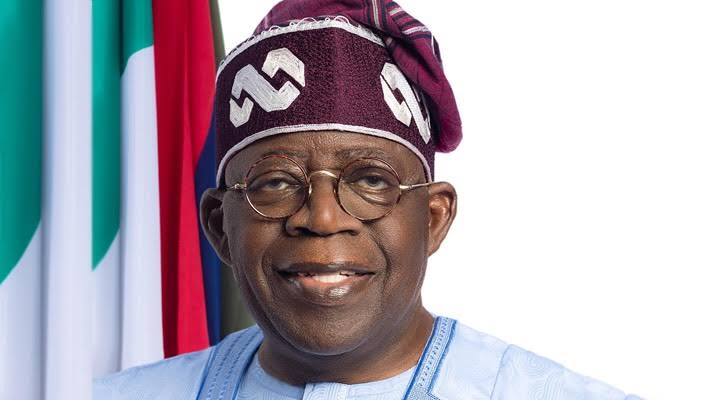
President Bola Ahmed Tinubu has formally submitted the names of two nominees to the Nigerian Senate for confirmation as the new chief executive officers of the country’s key petroleum regulatory agencies, marking a significant leadership transition in Nigeria’s oil and gas governance structure.
The nominations were conveyed in an official statement released by the Special Adviser to the President on Information and Strategy, Mr. Bayo Onanuga. According to the statement, the President’s action followed the voluntary resignations of Engineer Farouk Ahmed, who previously served as Chief Executive Officer of the Nigerian Midstream and Downstream Petroleum Regulatory Authority (NMDPRA), and Mr. Gbenga Komolafe, the former Chief Executive Officer of the Nigerian Upstream Petroleum Regulatory Commission (NUPRC).
Both regulatory bodies were established in 2021 under the Petroleum Industry Act (PIA), a landmark legislation enacted to reform Nigeria’s petroleum sector by separating policy formulation, regulation, and commercial operations. Engineer Farouk Ahmed and Mr. Komolafe were appointed to lead the agencies by former President Muhammadu Buhari shortly after the PIA came into force.
President Tinubu has now nominated Mrs. Oritsemeyiwa Amanorisewo Eyesan as Chief Executive Officer of the Nigerian Upstream Petroleum Regulatory Commission, while Engineer Saidu Aliyu Mohammed has been nominated as Chief Executive Officer of the Nigerian Midstream and Downstream Petroleum Regulatory Authority. The President also urged the Senate to fast-track the confirmation process in order to ensure continuity and stability within the petroleum regulatory framework.
In the statement, Mr. Onanuga described both nominees as highly experienced professionals whose careers span several decades in Nigeria’s oil and gas industry. He emphasized that their combined expertise aligns with the administration’s broader objective of strengthening institutional efficiency, transparency, and investor confidence in the energy sector.
The Nigerian Upstream Petroleum Regulatory Commission (NUPRC) is the government agency responsible for regulating upstream petroleum operations, which include crude oil and natural gas exploration, development, and production. The commission plays a central role in licensing, monitoring compliance, and ensuring optimal resource management in Nigeria’s upstream segment.
Mrs. Oritsemeyiwa Amanorisewo Eyesan brings extensive upstream experience to the role. She is a graduate of Economics from the University of Benin and spent nearly 33 years with the Nigerian National Petroleum Company Limited (NNPCL), Nigeria’s state-owned energy company. NNPCL, formerly known as the Nigerian National Petroleum Corporation (NNPC), oversees the commercial interests of the federal government in the petroleum industry.
Eyesan retired from NNPCL in 2024 as Executive Vice President, Upstream, a position in which she was responsible for overseeing upstream assets, joint ventures, and production strategies. Prior to that, she served as Group General Manager, Corporate Planning and Strategy between 2019 and 2023, where she was involved in long-term business planning, performance management, and strategic reforms within the company. Her nomination is widely viewed as a move that could deepen policy continuity and technical competence at the upstream regulatory level.
On the other hand, the Nigerian Midstream and Downstream Petroleum Regulatory Authority (NMDPRA) regulates petroleum transportation, processing, storage, distribution, and retail operations. The authority also oversees pricing frameworks, infrastructure development, and safety standards across the midstream and downstream segments of the petroleum value chain.
Engineer Saidu Aliyu Mohammed, the nominee for NMDPRA Chief Executive Officer, is a seasoned chemical engineer with an extensive leadership record across Nigeria’s refining, gas, and energy infrastructure sectors. Born in 1957 in Gombe State, he earned a Bachelor’s degree in Chemical Engineering from Ahmadu Bello University, Zaria, one of Nigeria’s leading institutions for engineering and technical education.
Mohammed was recently named an independent non-executive director at Seplat Energy, a Nigerian indigenous energy company with significant upstream and gas processing operations. His career includes serving as Managing Director of the Kaduna Refining and Petrochemical Company, one of Nigeria’s state-owned refineries, and as Managing Director of the Nigerian Gas Company, a key subsidiary responsible for gas transportation and supply.
Beyond executive management roles, Mohammed has chaired the boards of several strategic energy institutions, including the West African Gas Pipeline Company, Nigeria LNG subsidiaries, and NNPC Retail. Nigeria LNG is a major liquefied natural gas exporter and a critical source of foreign exchange earnings for the country.
He also previously held the position of Group Executive Director and Chief Operating Officer of the Gas and Power Directorate, where he provided strategic leadership for major gas development initiatives. These included the Gas Masterplan, which outlines Nigeria’s long-term gas utilization strategy, and the Gas Network Code, a regulatory framework governing third-party access to gas infrastructure. Mohammed also contributed to the drafting and implementation processes of the Petroleum Industry Act itself.
Throughout his career, Mohammed played important roles in several landmark energy infrastructure projects. These include the Escravos–Lagos Pipeline Expansion, which enhanced gas supply to industrial and power-generating facilities in southern Nigeria; the Ajaokuta–Kaduna–Kano (AKK) Gas Pipeline, a major national gas transmission project aimed at boosting gas availability in northern Nigeria; and multiple Nigeria LNG Train projects, which expanded the country’s liquefaction capacity for gas exports.
The Senate confirmation process is a constitutional requirement that allows lawmakers to assess the competence, integrity, and suitability of presidential nominees for key public offices. Once confirmed, the new chief executives will be tasked with enforcing regulatory compliance, implementing the Petroleum Industry Act, and supporting the Federal Government’s broader energy transition and economic diversification goals.
Industry analysts view the nominations as part of President Tinubu’s ongoing efforts to reposition Nigeria’s oil and gas sector amid global energy market shifts, domestic production challenges, and the push for increased gas utilization as a transition fuel. With oil and gas revenues remaining vital to Nigeria’s public finances, effective leadership at both the NUPRC and NMDPRA is considered critical for sustaining output, attracting investment, and improving regulatory certainty.
As the Senate prepares to deliberate on the nominations, attention remains focused on how the prospective leaders will navigate issues such as declining crude oil production, fuel supply reforms, gas infrastructure expansion, and the enforcement of transparent regulatory practices under the Petroleum Industry Act. If confirmed, Eyesan and Mohammed are expected to assume office at a time when Nigeria’s energy sector faces both significant risks and strategic opportunities.